Amazon Shop the Show Expands to 8,000+ Prime Video Titles in 2026
Amazon expanded Shop the Show from 1,300 to over 8,000 Prime Video titles, adding a Shop tab in X-Ray and Shop the Scene visual search. The feature surfaces 'inspired by' products rather than exact on-screen items.
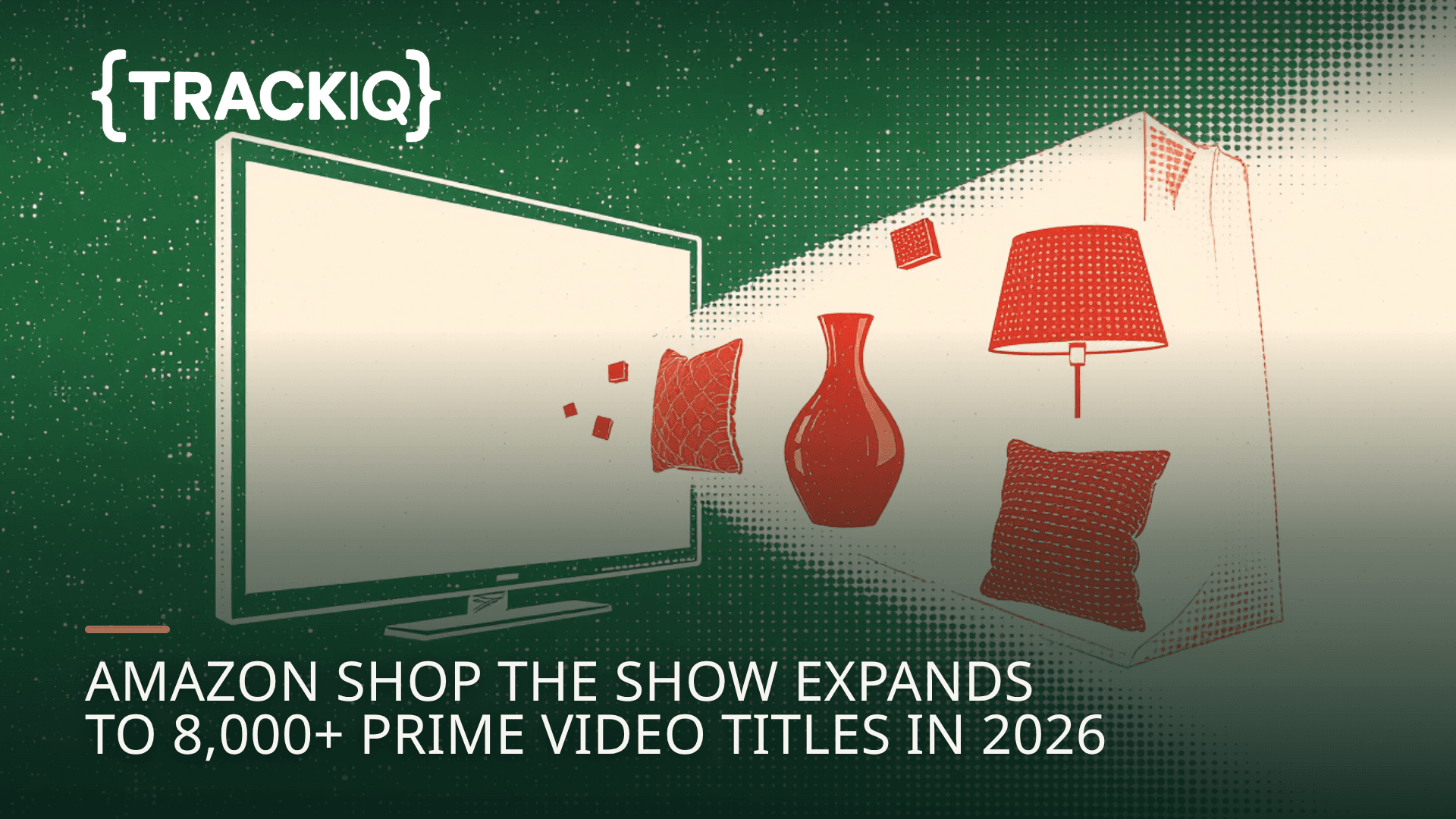
Amazon Shop the Show now covers 8,000+ Prime Video titles (up from 1,300), featuring a dedicated Shop tab in X-Ray and Shop the Scene visual search powered by Amazon Lens. Critically, the feature surfaces 'inspired by' products—similar items from Amazon's catalog—not the exact items shown on screen, creating new product discovery opportunities but requiring sellers to understand customer expectations around accuracy.
Key Takeaways: What Sellers Need to Know
Massive expansion: Shop the Show jumped from 1,300 to 8,000+ Prime Video titles in 2026, dramatically increasing the surface area for product discovery
'Inspired by' not exact match: The feature returns similar products from Amazon's catalog rather than the actual items seen on screen—a crucial distinction for managing customer expectations
Two discovery paths: The Shop tab in X-Ray and Shop the Scene visual search create multiple touchpoints for viewers to transition from entertainment to shopping
Algorithm-driven selection: Amazon's systems determine which products appear based on similarity, availability, and likely other proprietary signals sellers cannot directly control
New traffic channel: For sellers with products that align with popular content aesthetics, this represents a potentially significant organic discovery opportunity
The Shop the Show Expansion: Scale and Mechanics
Amazon's rollout transforms Prime Video from a passive viewing experience into an active shopping channel. The feature now spans more than 8,000 titles, a sixfold increase from the initial launch. According to EcomCrew's analysis, this expansion touches everything from blockbuster original series to licensed content across the Prime Video library.
[[TQ_YOUTUBE:nnG-T7zU5kY]]
Viewers access Shop the Show through two primary interfaces:
Shop tab in X-Ray: Appears directly in Amazon's contextual information overlay that already displays cast details and trivia
Shop the Scene visual search: Viewers pause content, tap an item on screen, and receive product recommendations
This dual approach mirrors shopping behavior in physical retail. The Shop tab operates like browsing a curated display inspired by a store window, while Shop the Scene resembles pointing at something and asking "where can I find that?"
8,000+ titles now feature Shop the Show integration, creating thousands of new discovery touchpoints across Prime Video's catalog
How Amazon Lens Powers Shop the Scene
Shop the Scene builds on Amazon Lens, the visual search technology Amazon has deployed across its mobile app since 2019. Lens uses computer vision and machine learning to identify objects in images, then matches them against Amazon's product catalog.
When a viewer taps an on-screen object, the system analyzes visual characteristics—color, shape, category, style—and returns products from Amazon's inventory that share those attributes.
The 'Inspired By' Reality: Why Exact Matches Aren't the Promise
Here's the critical caveat that sellers must understand: Shop the Show does not guarantee, or even typically deliver, the exact product visible in the content. Instead, it surfaces items Amazon describes as "inspired by" what viewers see.
This distinction carries significant implications. Production studios source props, wardrobe, and set dressing from specialized suppliers, vintage dealers, custom fabricators, and luxury brands—many of which don't sell through Amazon.
Amazon's algorithm prioritizes available inventory over the specific SKU shown, even when a recognizable brand appears on screen.
Discovery Method | Matching Approach | Result Type |
|---|---|---|
Shop Tab (X-Ray) | Content-wide aesthetic matching | Curated collection inspired by show style |
Shop the Scene (Lens) | Specific object visual analysis | Similar products matching tapped item |
Traditional Product Search | Keyword and filter-based | Direct SKU or exact specification match |
Customer Expectation Management
The 'inspired by' model creates a gap between what viewers might expect ("I want that exact lamp from the show") and what they receive ("here are similar lamps available on Amazon").
For sellers, this means products appearing in Shop the Show results may face higher return rates or lower satisfaction scores if customers expected an exact replica.
Smart sellers address this in product listings. Use phrases like "similar style to," "inspired by," or "reminiscent of" when appropriate, especially if your product frequently appears in Shop the Show results for specific content. This preemptively manages expectations while still capitalizing on the discovery opportunity.
Opportunity Assessment for Amazon Sellers
The expansion to 8,000+ titles creates genuine new traffic channels, but not all sellers benefit equally. Categories with strong visual identity and aesthetic alignment—home décor, fashion, furniture, lighting—gain the most from Shop the Show placement.
[[TQ_IMG:https://framerusercontent.com/images/x4xburIylpn6pHaiFtbjrzoVZ4.png|The 'Inspired By' Reality: Why Exact Matches Aren't the Promise]]
Products appearing in Shop the Show results receive exposure to viewers in a high-intent discovery mode, transitioning directly from inspiration to shopping
Which Product Categories Benefit Most?
Home furnishings and décor dominate Shop the Show opportunities. Viewers watching period dramas, contemporary sitcoms, or design-focused reality shows often seek to recreate the aesthetic in their own spaces.
Amazon's algorithm surfaces throw pillows, coffee tables, wall art, and lighting that match the on-screen ambiance.
Fashion and accessories follow closely. Clothing, handbags, shoes, and jewelry visible in Prime Video content—particularly in fashion-forward series—drive significant Shop the Show impressions. The challenge here is that exact brand replication matters more to fashion-conscious consumers, making the 'inspired by' caveat more pronounced.
Electronics and small appliances gain selective placement. Kitchen gadgets, headphones, and smart home devices appearing in content generate Shop the Show results, especially when the on-screen item is a recognizable product category rather than a specific brand.
Attribution and Performance Tracking Challenges
Amazon does not currently provide sellers with explicit Shop the Show attribution in Seller Central reporting. You cannot see "137 units sold via Shop the Show on The Marvelous Mrs. Maisel." This opacity complicates ROI analysis and strategic planning.
Sellers using TrackIQ or similar analytics platforms can monitor for unusual traffic spikes or conversion pattern changes that might correlate with Shop the Show exposure, but direct attribution remains elusive.
Watch for increases in organic traffic, session rates, and sales velocity that don't correspond to your advertising spend or search rank changes—these may signal Shop the Show impact.
Optimization Strategies: Positioning for Discovery
While Amazon hasn't published an explicit Shop the Show optimization guide, sellers can apply proven principles to increase the likelihood of appearing in results.
Image Quality and Consistency
Visual search algorithms depend on high-quality, clear product images. Ensure your main image features the product against a pure white background with professional lighting. Include lifestyle images that show the product in context—these help Amazon's system understand the aesthetic category and use case.
Consistency matters. If you sell a mid-century modern credenza, use staging that reinforces that style identity across all images. Amazon's algorithm likely uses these visual cues to match your product with content featuring similar aesthetics.
Complete and Accurate Product Attributes
Fill every available product attribute field in Seller Central. Style, color, material, pattern, and dimensions help Amazon's matching algorithms understand where your product fits.
For apparel, complete size, fit, and occasion attributes. For home goods, specify style era, room placement, and design theme.
These attributes feed the recommendation engine. When a viewer taps a Scandinavian-style chair on screen, Amazon's system queries products tagged with "Scandinavian," "mid-century," "minimalist," and related style attributes.
Competitive Pricing and Strong Performance Metrics
Amazon favors products with competitive pricing and strong conversion metrics across its recommendation systems. Shop the Show likely follows similar logic.
A product with a 15% conversion rate and Prime eligibility will outcompete a visually similar item priced 30% higher with spotty reviews.
Maintain competitive pricing relative to similar items. Monitor your conversion rate, order defect rate, and customer reviews. These performance signals influence whether Amazon's algorithm selects your product over alternatives when multiple items match the visual search criteria.
Optimization Factor | Impact Level | Implementation Difficulty |
|---|---|---|
Professional product photography | High | Moderate |
Complete attribute data | High | Low |
Competitive pricing strategy | Moderate | Ongoing |
Strong conversion & review metrics | High | High (time investment) |
Strategic Implications: The Convergence of Content and Commerce
Shop the Show represents Amazon's broader strategy to collapse the boundary between entertainment and e-commerce. This isn't unique to Amazon—social platforms have pursued similar models with shoppable video—but Amazon's vertical integration from content production to fulfillment creates distinctive advantages.
For sellers, this convergence means product discovery increasingly happens outside traditional search. Shoppers arrive at product pages not because they searched "modern floor lamp" but because they tapped one in a Prime Video show.
This pathway bypasses keyword competition and advertising costs, but also removes much of the control sellers have over messaging and positioning.
The Long-Term Trajectory
Amazon will likely expand Shop the Show integration as computer vision and recommendation algorithms improve. Expect tighter integration with other Amazon services—Alexa voice commands to purchase items from paused content, automatic addition of "inspired by" items to wishlists, or integration with Amazon's generative AI shopping assistant.
The shift toward visual and contextual discovery also pressures sellers to think beyond keyword optimization. Products succeed when they align with cultural trends, aesthetic movements, and content themes—factors traditionally outside the Amazon seller playbook.
According to Amazon Advertising, video and visual content drive increasingly significant portions of customer journeys. Shop the Show integrates product discovery directly into that journey, reducing friction between inspiration and transaction.
The future of e-commerce discovery increasingly bypasses traditional search, with contextual and visual pathways delivering customers directly to relevant products
Risks and Considerations for Sellers
Not all Shop the Show exposure benefits sellers equally. Products appearing as poor matches for what viewers expected face higher return rates, negative reviews citing "not as shown," and suppressed future placement as Amazon's algorithm learns from poor performance signals.
[[TQ_IMG:https://framerusercontent.com/images/q5DbFGDusQE4uzNHi9yhGn4JelY.png|Optimization Strategies: Positioning for Discovery]]
Sellers cannot control which content their products appear alongside. A home décor item might surface in results for a critically acclaimed drama or a poorly-reviewed straight-to-streaming film. You have no ability to opt out of specific titles or genres, unlike targeted advertising where you control placement.
Inventory and Demand Forecasting Complications
Shop the Show exposure can create unpredictable demand spikes. If your product appears prominently in results for a newly-released hit series, you might see a sudden 10x increase in daily sales.
Without explicit attribution, you cannot forecast these spikes or prepare inventory accordingly.
Sellers should maintain buffer inventory and responsive supply chains. Monitor velocity changes closely and be prepared to increase inventory levels or implement temporary price adjustments if you suspect Shop the Show exposure is driving demand.
Tools like TrackIQ's AI-powered analytics can help identify anomalous traffic and conversion patterns that might indicate external drivers like Shop the Show placement.
Practical Next Steps for Sellers
Audit your catalog for Shop the Show potential. Identify products with strong visual identity, clear style associations, and high-quality images. Prioritize completing attribute data for these items first.
Refresh product photography if your current images don't clearly communicate style and context. Invest in lifestyle staging that reinforces your product's aesthetic category. A Bohemian-style rug photographed in a Bohemian-styled room helps Amazon's algorithm understand the match.
Monitor performance metrics for sudden changes. Set up daily or weekly reports tracking sessions, conversion rate, and units sold. Look for unexplained increases that might correlate with new Prime Video content releases—these could signal Shop the Show exposure.
Adjust product descriptions to manage expectations around "inspired by" positioning. Use language that emphasizes style and aesthetic rather than exact replication, especially for products in categories like furniture and fashion where consumers might expect screen-accurate items.
Stay informed about Amazon's evolving discovery features. Shop the Show represents one piece of a broader shift toward visual and contextual shopping. Sellers who adapt their optimization strategies beyond traditional keyword targeting will capture more traffic from these emerging channels.
For real-time insights and AI-powered analysis of your Amazon performance across all channels, explore how TrackIQ's Model Context Protocol integration connects your business data directly to AI assistants for instant strategic guidance.
[[TQ_SOURCES]]Amazon Made 8,000+ Prime Video Titles Shoppable | https://www.ecomcrew.com/amazon-made-8000-prime-video-titles-shoppable-and-it-usually-wont-find-the-exact-item/; Amazon Advertising | https://advertising.amazon.com; Amazon Lens Visual Search | https://www.amazon.com; Amazon Prime Video | https://www.amazon.com/primevideo

Jacob Heinz
Frequently asked questions
What is Amazon Shop the Show?
Amazon Shop the Show is a feature that lets Prime Video viewers discover and purchase products related to what they're watching. It displays items inspired by the furniture, clothing, and accessories seen in TV shows and movies.
How many Prime Video titles support Shop the Show in 2026?
As of 2026, Amazon Shop the Show is available across more than 8,000 Prime Video titles, a significant expansion from the initial 1,300 titles when the feature first launched.
Does Shop the Show show the exact products from TV shows?
No. Shop the Show surfaces 'inspired by' products—similar items from Amazon's catalog that match the style, category, or aesthetic of on-screen items rather than the exact products used in production.
How do viewers access Shop the Show on Prime Video?
Viewers can access Shop the Show through the dedicated Shop tab in Prime Video's X-Ray feature or by using Shop the Scene, a visual search tool that lets you pause and tap on specific items to find similar products.
Can sellers optimize their products for Shop the Show visibility?
While Amazon hasn't published explicit Shop the Show optimization guidelines, sellers can focus on high-quality images, comprehensive product attributes, accurate categorization, and competitive pricing to increase the likelihood of their products appearing in 'inspired by' results.
─ READY WHEN YOU ARE
Ready to plug TrackIQ into your AI?
Install in under five minutes. No credit card. Bring your own Claude, ChatGPT, or Cursor — TrackIQ handles the data.